A Day That Might Shape the Future: High School Students Among BME Researchers
The Autonomous Systems National Laboratory at the Budapest University of Technology and Economics (BME) recently brought the latest results of autonomous vehicle research closer to high school students through an online educational resource and an associated knowledge-based quiz competition. The top-performing students of the nationwide quiz were invited to a unique experience day on campus, where they got a glimpse into the underlying technologies, laboratories, and ways of thinking behind future mobility. Interviews conducted throughout the day reveal that it was not only the live demonstrations that captivated students, but also the depth of knowledge and the authenticity of the expert speakers that left a lasting impact.
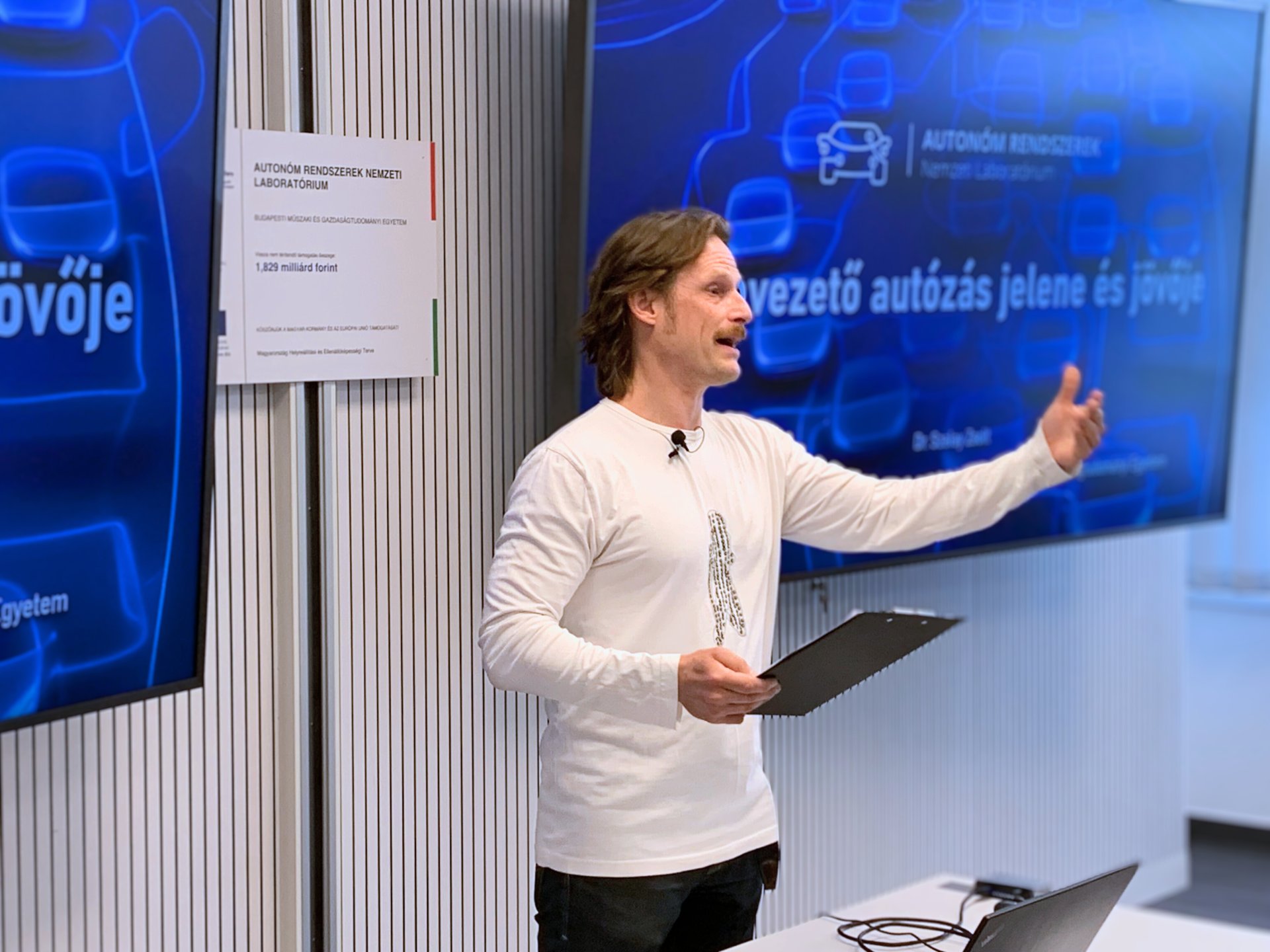
The event was hosted by actor Iván Fenyő.
“It’s important that kids hear about these technologies from credible sources”
Csilla Petrohainé Rostás, a teacher from Padányi Catholic School in Veszprém, shared her impressions after the event, speaking about the students’ curiosity and the pedagogical challenges of the digital future.
“There is a huge interest in autonomous vehicles,” she began. “We had already discussed the content with the students after the teacher briefing, and the materials clearly made a strong impression on them.” She noted that the students found the online content and the quiz game engaging, particularly the fact that sometimes there wasn’t a single correct answer—something that sparked real thinking.
Many students from her school took the test, and three of them were invited to the event. “They were thrilled, because they could feel this was a meaningful invitation, a real opportunity.”
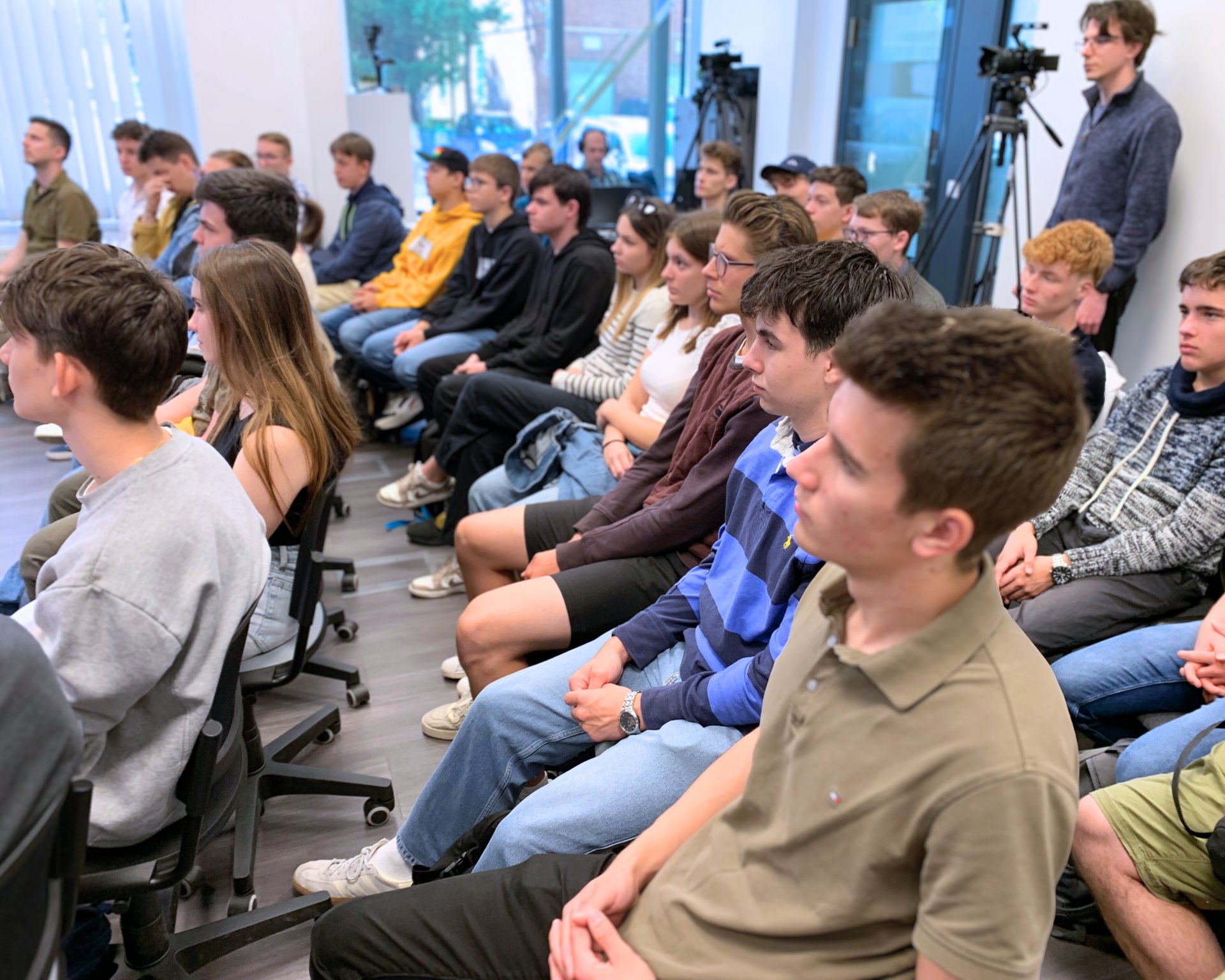
As a teacher, she found the day equally inspiring. “It was fascinating to gain insight from first-hand experience, to see exactly where this field currently stands.”
The professional level of the event also reinforced her teaching philosophy. “It was motivating, because it confirmed that I’m on the right track when I talk to my students about the digital future. But I also see how much more teamwork, information, and inspiration they need, because their knowledge in this area is still quite limited.”
She emphasized the importance of credible sources. “There is a lot of sensationalist content in the media, but students only get a truly meaningful picture from events like this. That’s why it would be great if these programs were held more regularly.”
Dr. Szalay Zsolt előadása
She also highlighted that autonomous vehicle development is not only for engineers. “It’s important for students to see that if someone is interested in law, they don’t only have to become a lawyer—they could work on the legal aspects of autonomous systems. I’d love to see more attention given to these interdisciplinary paths in education.”
Social acceptance, too, is a key issue. “How does society handle the idea that not all vehicles are driven by humans anymore? This is an exciting area for both psychology and sociology.”
Closing her remarks, she thanked the organizers and offered suggestions: “It would be amazing if students had more opportunities to meet credible professionals who not only give presentations but offer real insight into what skills are needed. These moments also help teachers better understand how to motivate students. If we had a clearer idea of where incoming university students tend to struggle, we could better support them.”
“The quiz was great, and now we’re even considering trying out some form of Scientific Student Research Projects (TDK) ourselves.”
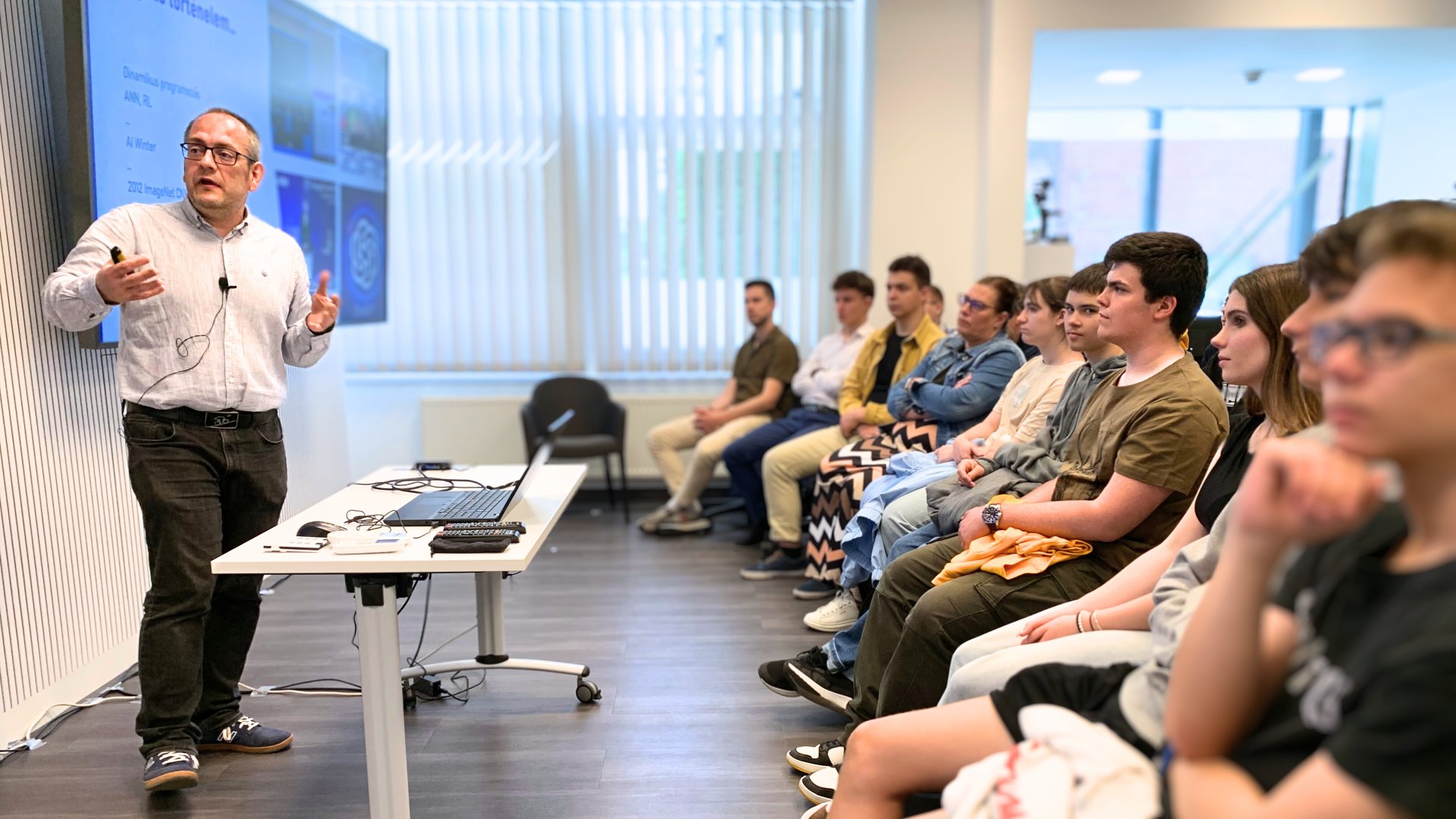
The Lecture of Tamás Bécsi, Ph.D
A Glimpse into the Near Future: Students Reflect on the ARNL Knowledge Challenge
The quiz competition organized by the Autonomous Systems National Laboratory at BME was more than just an online knowledge test: it was an opportunity for the top-performing students to experience firsthand what it means to work on the automotive technologies of the future. Interviews from the event reveal that students were not only amazed by live demonstrations but also deeply inspired by the expertise and authenticity of the speakers.
Márton Marton-Bódi (Szent Mór School Center, Pécs) joined the quiz out of a general interest in electronics and engineering. “I was already curious about autonomous driving and AI, but I had never seen these systems explained in such detail before.” By the end of the day, he was enthusiastically talking about AI functionality and vehicle architecture.
Zsombor Bánhelyi (Ady Endre High School) found the program “inspiring.” “I especially liked the sensor explanations in the presentations. I understood details I had never seen before.” He hadn’t expected to be invited but was delighted to attend.
András Vincze-Pál (Budapest Fasori Evangelical High School) already has his sights set on BME. For him, both the content and the environment were impactful. “The level of research and presence of technology were really impressive. It’s clear that the future is being built here.”
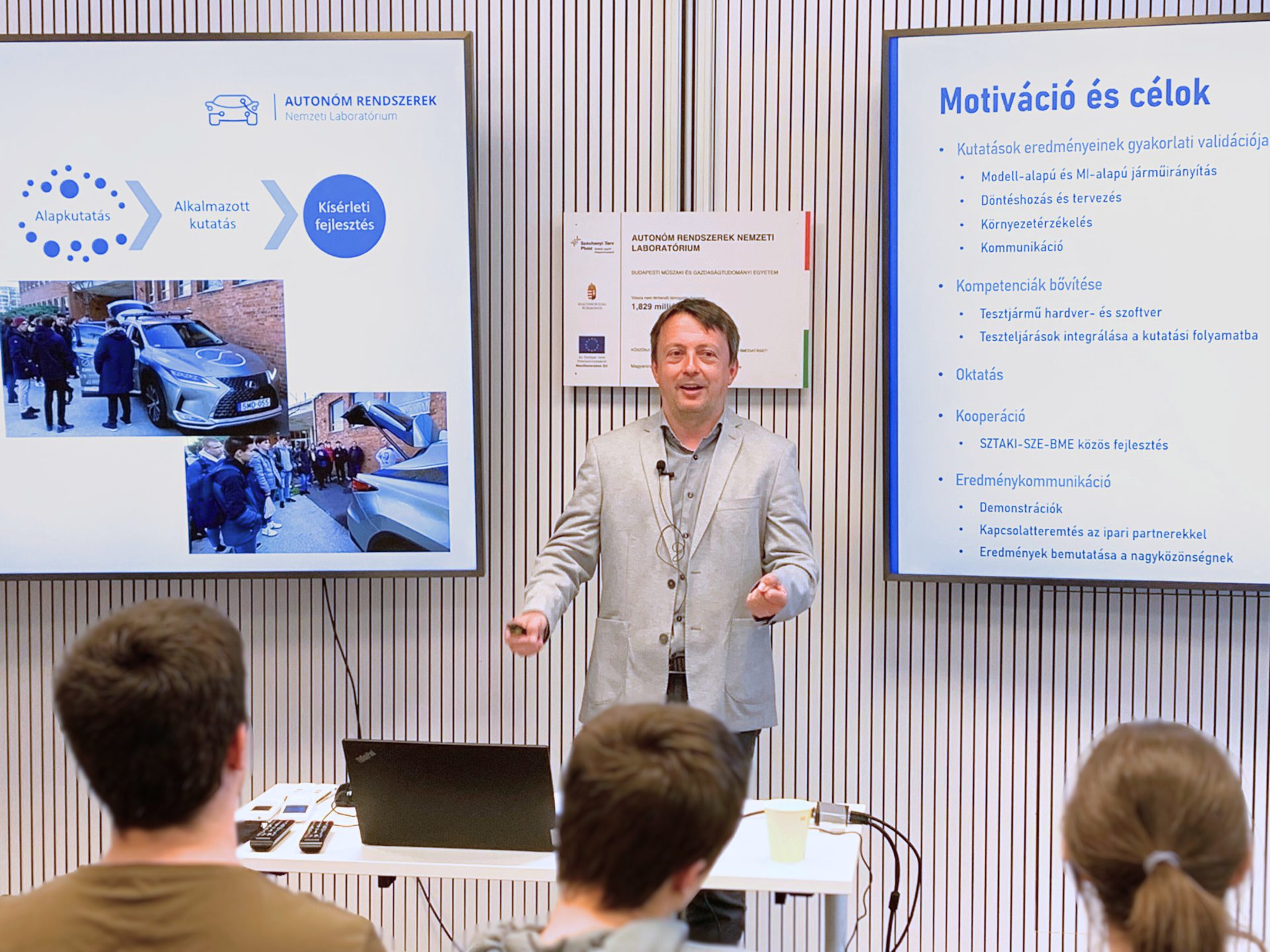
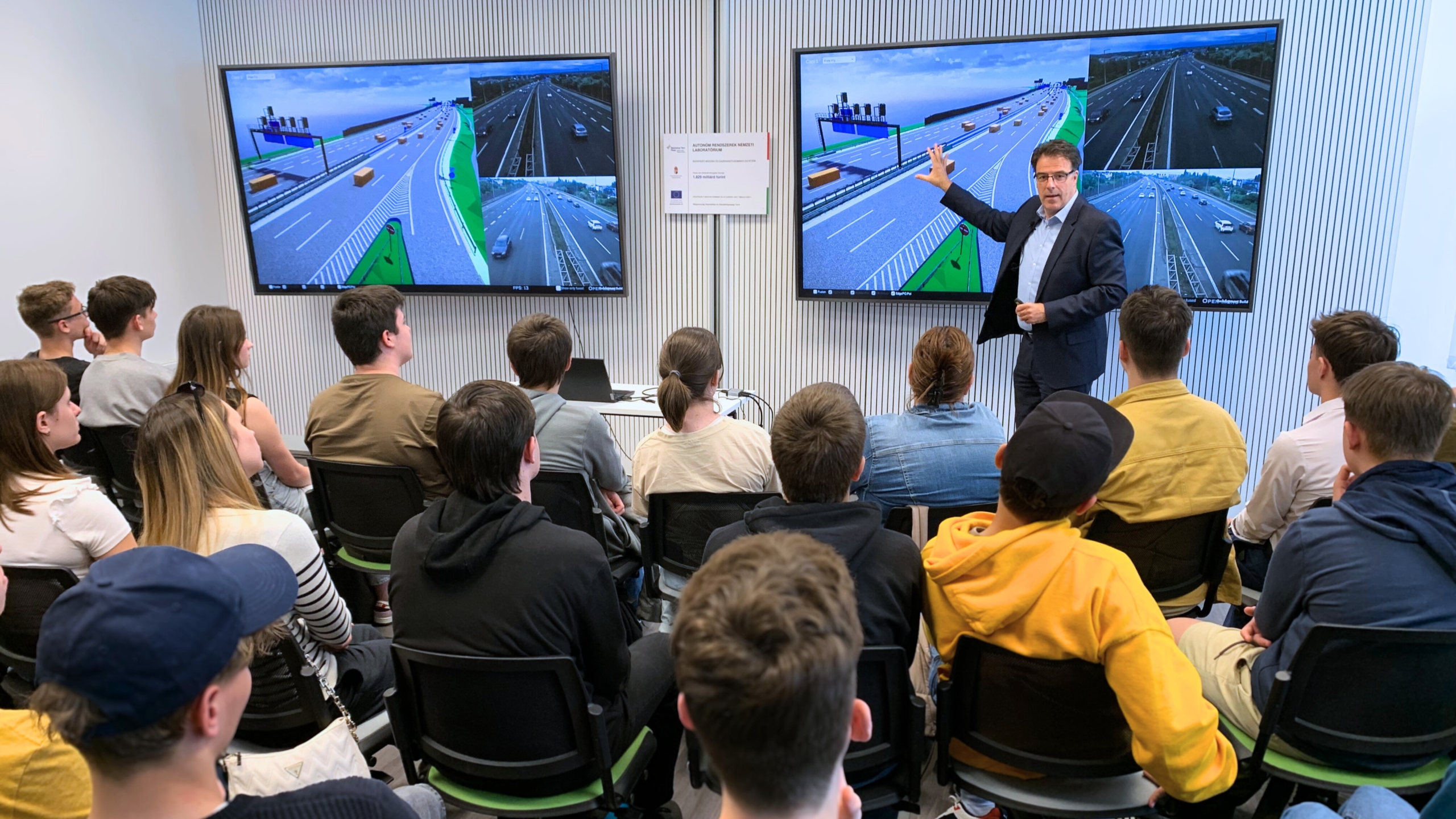
The Lecture of Szilárd Aradi, Ph.D
Kristóf Bognár and Gergely Mendrei-Benkő from the Bánki Donát Technical School received the quiz as an assignment during online learning. For both of them, artificial intelligence was the highlight: “We got a peek into the future,” said Kristóf.
Csongor Csevrenka and Patrik Pardi from Gyula Catholic High School especially remembered Dr. Tamás Bécsi’s lecture: “It was simple, easy to understand, and still exciting.” They also appreciated the lab visits and the presentation about the ZalaZONE proving ground, which Csongor described as “an amazing experience.”
Students Ármin Hegedűs and Benedek Dunajcsik (Padányi Catholic School, Veszprém) most enjoyed the presentations and seeing the real technologies up close. “We saw how the LIDAR works and how systems connect,” they shared.
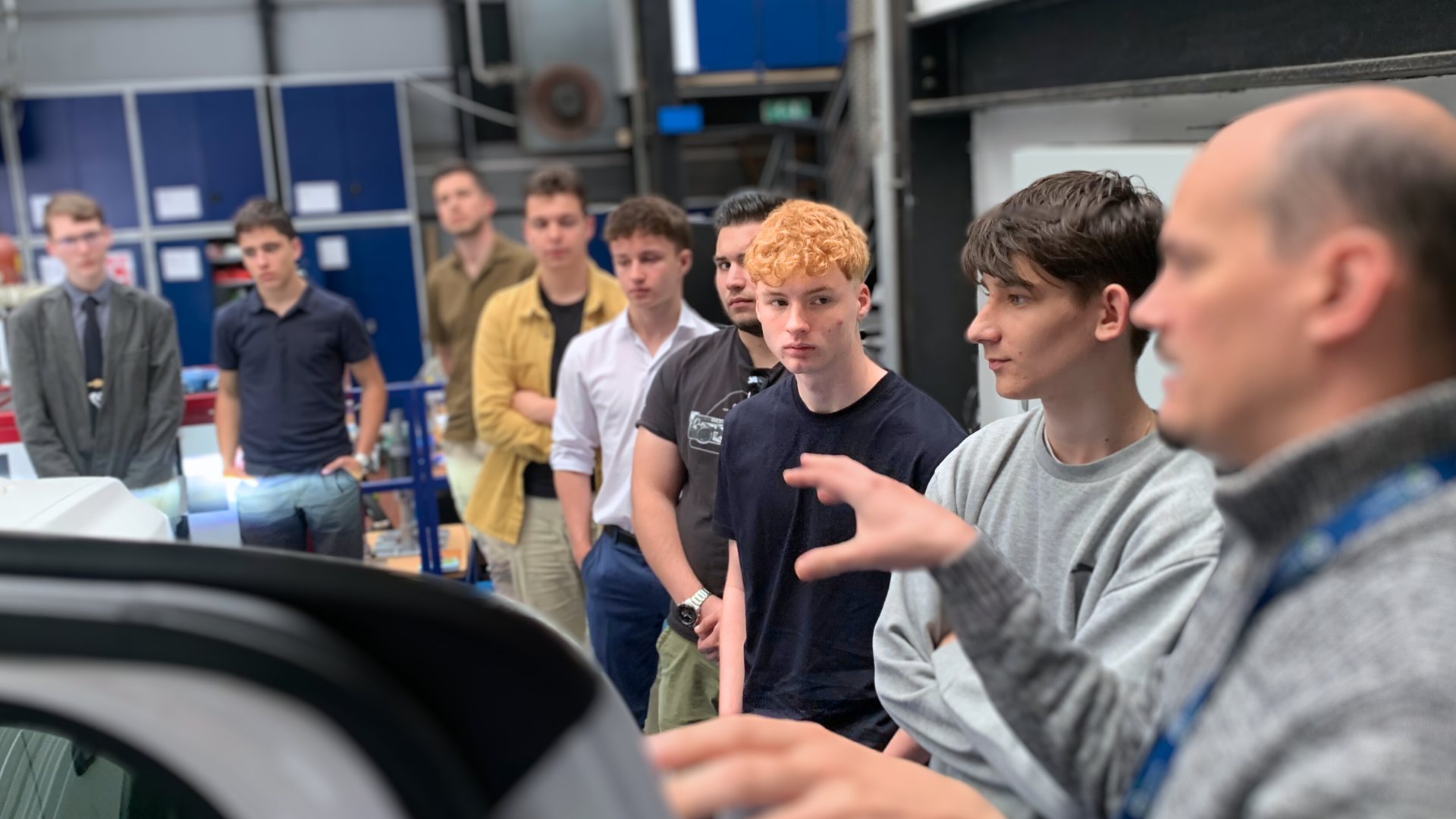
Lab Visit
Angéla Balogh (Csokonai V. Mihály High School, Debrecen) was invited after her chemistry teacher forwarded the quiz. “I didn’t expect it to be this interesting. I learned so much about AI and autonomous vehicles. And it was great to see everything up close, not just in pictures.”
Marcell Kozsda, who learned about the event through his mother, a BME staff member, especially appreciated the amount of information. “There was a lot to process, but it was incredibly interesting. Especially the monitoring systems that feed data to AI. I had no idea how complex that process is.”
The students’ responses clearly show: this event offered not just information, but motivation, guidance, and inspiration. Many of them are still exploring their paths, but one thing is certain: on that day, they moved closer to a future we are only beginning to imagine.
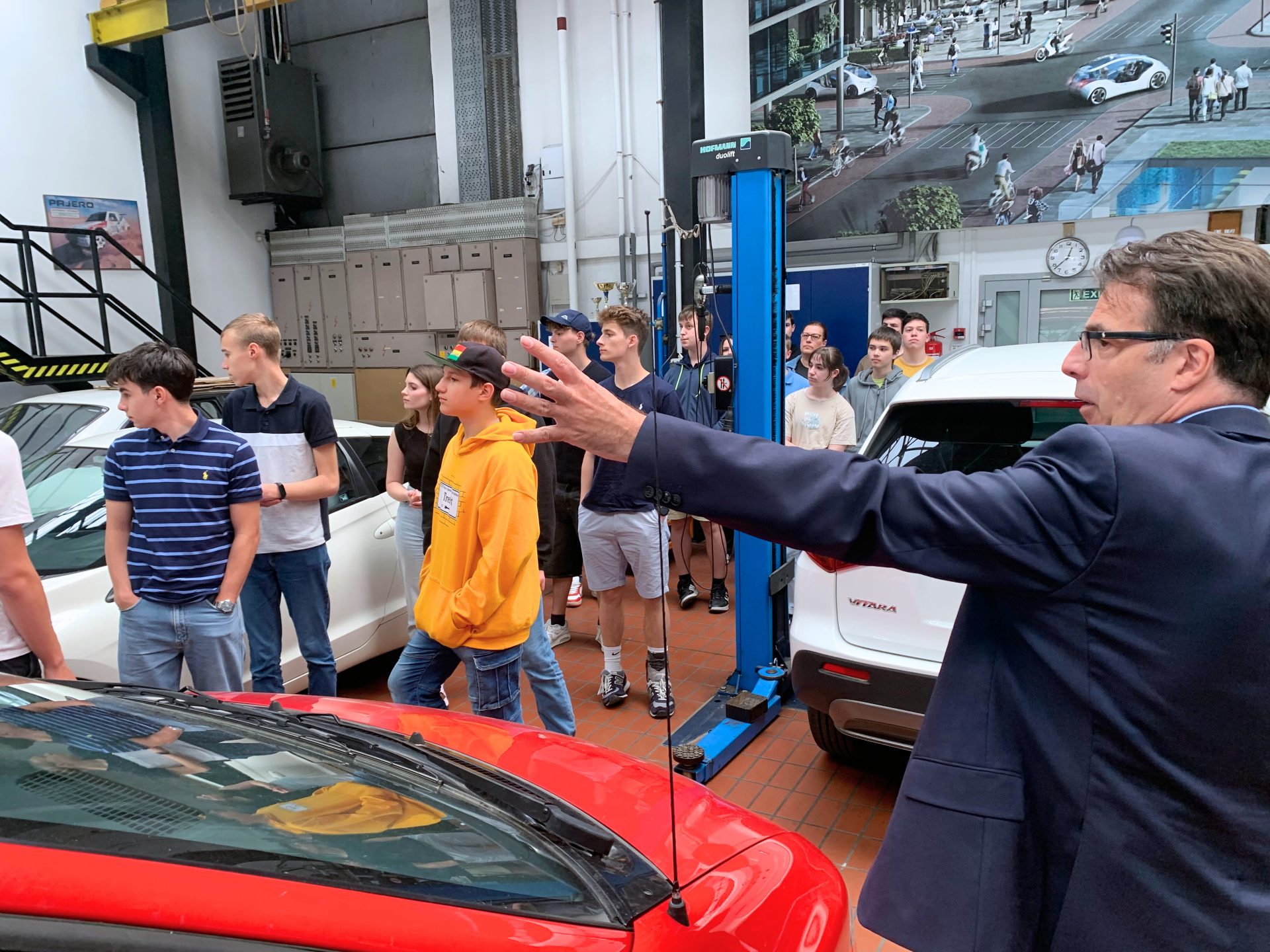
Lab Visit