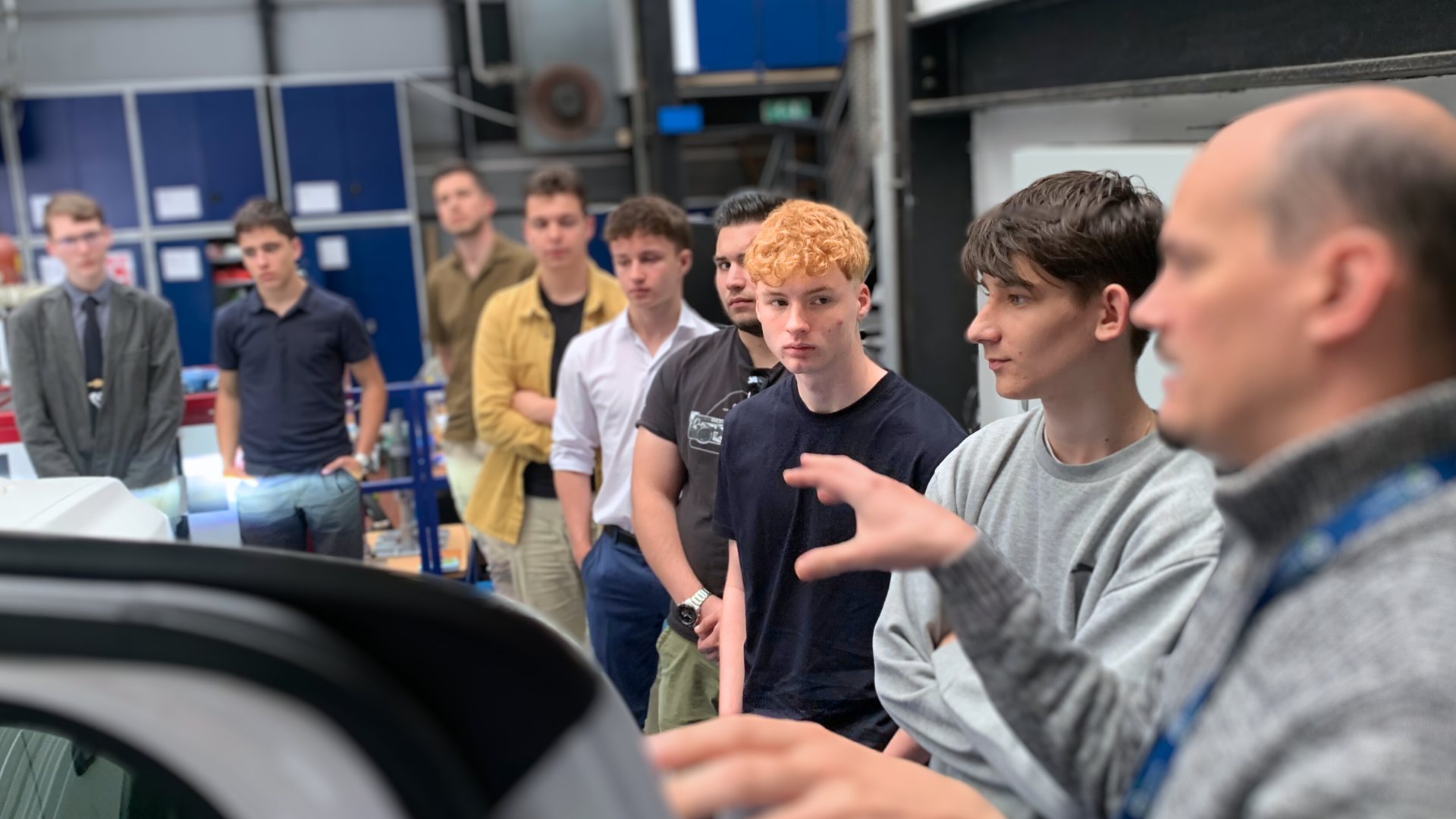
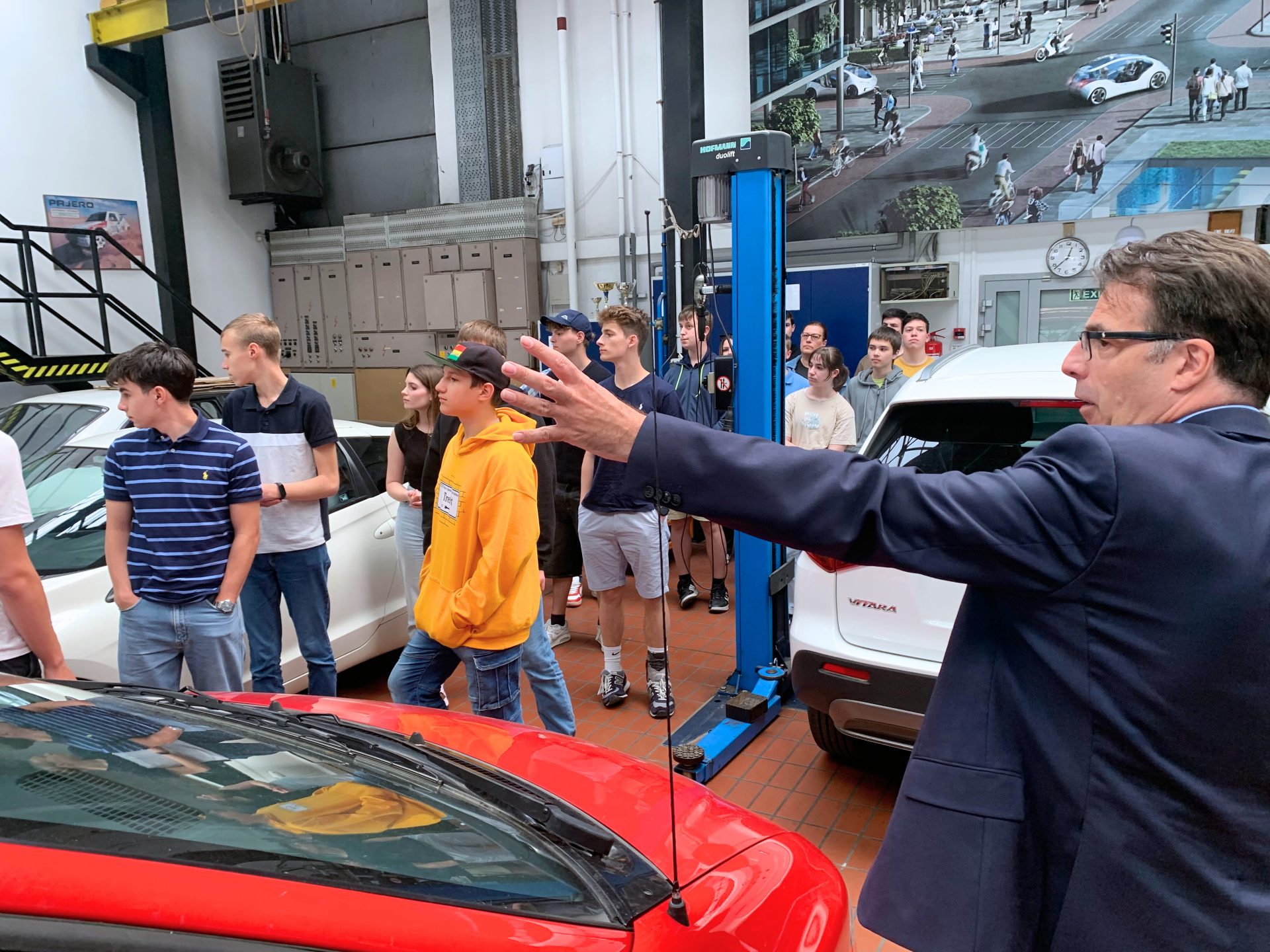
In early August 2025, Dr. Zsolt Szalay, Head of the Department of Automotive Technologies, Dr. Árpád Török, Head of the Safety and Security Research Group, along with Dr.Zsombor Pethő, Research Fellow, and Tamás Kazár, PhD student, took part in a professional visit to Karlsruhe.
The joint workshop, hosted by the Institute for Information Processing Technology (Institut für Technik der Informationsverarbeitung – KIT ITIV) and the FZI Research Center for Information Technology (FZI Forschungszentrum Informatik), provided an excellent opportunity to share research results, exchange professional experiences, and strengthen existing collaborations.
Held in a friendly and inspiring atmosphere, the event not only fostered discussions on current projects but also laid the groundwork for new joint research directions. The meeting further deepened the connection between the two institutions and contributed to the launch of future joint innovation initiatives and international projects
https://auto.bme.hu/wp-content/uploads/2025/08/Karlsruhe3-hir-.jpg15361920Bognár Bertalan/wp-content/uploads/2024/07/bme-at_logo_white_en01.svgBognár Bertalan2025-08-11 13:48:202025-08-11 13:56:33The Department of Automotive Technologies Strengthens International Ties at Karlsruhe Workshop
Three researchers from the Department of Automotive Technologies at the Budapest University of Technology and Economics (BME) recently conducted a study visit to examine China’s most advanced intelligent transportation systems. Their key takeaway: the digital twin-based smart highway section on Hungary’s M1–M7 motorway exceeds the Chinese systems in both accuracy and latency. The solution developed at BME has implemented what is currently the most advanced smart road section in the world.
“The World’s Smartest Highway Section” – Hungarian Innovation Recognized in China
In July 2025, three researchers from BME – Dr. Zsolt Szalay (Head of Department), Dr. András Rövid, and Zsolt Vincze – embarked on an extensive study tour across China and Hong Kong. Their goal was to gain firsthand insights into the development of Chinese intelligent transport infrastructure and strengthen the ongoing collaboration between BME and the City University of Hong Kong.
One of the most important conclusions from the trip was that – although Chinese smart road networks cover far greater distances than Hungary’s demonstration section – the technological sophistication of the M1–M7 digital twin system, especially in terms of precision and real-time performance, surpassed all the systems observed in China.
Experts at multiple institutions in China openly acknowledged this and expressed their aim to reach the technological level already achieved in Hungary.
This feedback reinforces the fact that the M1–M7 smart road section, developed by BME, is not only a European but also a global benchmark in intelligent road infrastructure. It rightly deserves to be called: the world’s smartest highway section.
Hong Kong: Teleoperation Breakthroughs and International Innovation Programs
Invited by the City University of Hong Kong, the BME delegation reaffirmed an existing research collaboration. The teleoperation system used in Hong Kong is powered by technology developed at BME, and recent improvements have reduced response latency to below 10 milliseconds using a local server—an exceptionally low delay even by global standards.
The development experiences from Hungary’s M1–M7 smart road also attracted strong interest, and two new joint project proposals were outlined during the visit.
The CityU leadership—including Vice President for Innovation and Entrepreneurship Prof. Michael Yang and Prof. Johnny Ho—introduced the HKtech300 program, which supports research-driven technology startups with seed investments equivalent to approximately 100,000 EUR. The program is open to international partners, and future joint patent applications with BME are also on the agenda.
BYD, Tsinghua, CICV – China’s Technology Hubs
At the Shenzhen headquarters of BYD, Vice President Luo Zhongliang and the future director of the Hungarian plant confirmed that they are actively seeking MSc and PhD students for their Budapest R&D base and are open to launching a collaborative program proposed by BME.
At Beijing’s National Intelligent Connected Vehicle Innovation Center (CICV), experts responded positively to the technological solutions implemented on the M1–M7 section, stating that they are aiming to reach a similar level.
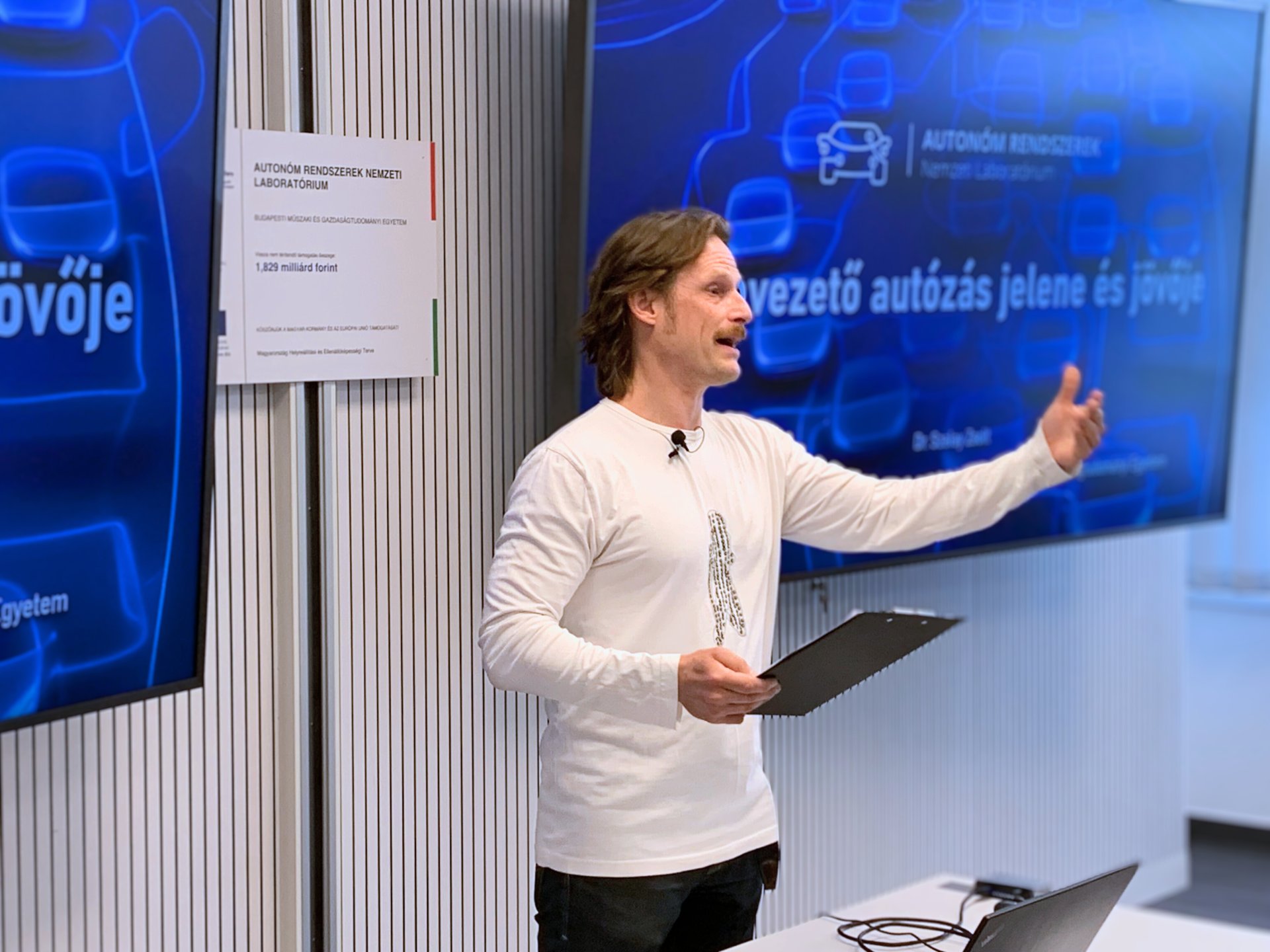
At Tsinghua University, Dr. Zsolt Szalay’s lecture attracted great interest, particularly in the topics of digital twin technology and autonomous drifting—areas where Chinese professors acknowledged that Hungary has a truly unique approach.
Real-World Traffic Tests and AI – Insights from Multiple Chinese Cities
In Beijing and Suzhou, the BME researchers encountered various smart transport solutions where autonomous vehicles are already operating in real urban traffic. These included buses and shuttle vehicles that alternated between relying on their own sensors and external infrastructure signals.
Among the Chinese implementations, Suzhou had the most advanced digital twin model, but even this was found to be surpassed by the Hungarian M1–M7 system in terms of technical capabilities.
Chongqing and Seres Automotive: Training Future Engineers and Autonomous Luxury Vehicles
At Chongqing University, the team was introduced to cutting-edge research in the automation of land, air, and water-based vehicles. Meanwhile, a visit to the Seres Automotive factory showcased the production of Huawei-powered AITO luxury vehicles.
The delegation rode in the M9 flagship model on a fully autonomous 25-minute journey from the factory to the airport. The vehicle successfully handled two unexpected traffic scenarios, demonstrating the maturity of the system.
Global Experience, Local Success – BME’s Smart Road Becomes a Global Reference
The study tour offered unambiguous confirmation: the digital twin-based system developed by the Budapest University of Technology and Economics not only held its ground against the world’s top smart road technologies — it actually outperformed them.
The M1–M7 smart road section has become an international reference point and rightfully claims the title: the world’s smartest highway section.
The collaborations already launched or currently under development—as well as the growing international recognition of Hungarian solutions—are paving the way for Hungary to become a key player in the future of mobility.
https://auto.bme.hu/wp-content/uploads/2025/07/Kina2-_retus.jpg15361920Bognár Bertalan/wp-content/uploads/2024/07/bme-at_logo_white_en01.svgBognár Bertalan2025-07-30 13:01:332025-07-31 13:22:01Hungarian Smart Road Becomes World Leader – Confirmed by BME’s Study Visit to China
https://auto.bme.hu/wp-content/uploads/2025/07/M1M7_Hir_kep.jpg15361920Bognár Bertalan/wp-content/uploads/2024/07/bme-at_logo_white_en01.svgBognár Bertalan2025-07-14 15:17:302025-07-31 15:28:37The world’s most intelligent motorway section is now operational in Budaörs
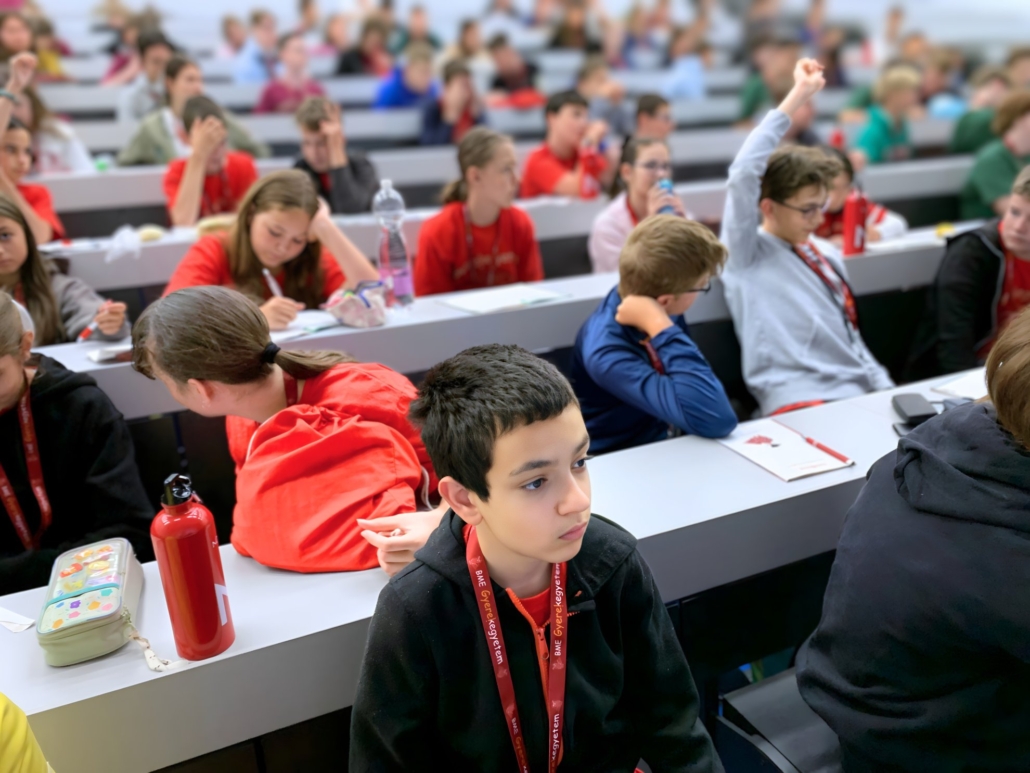
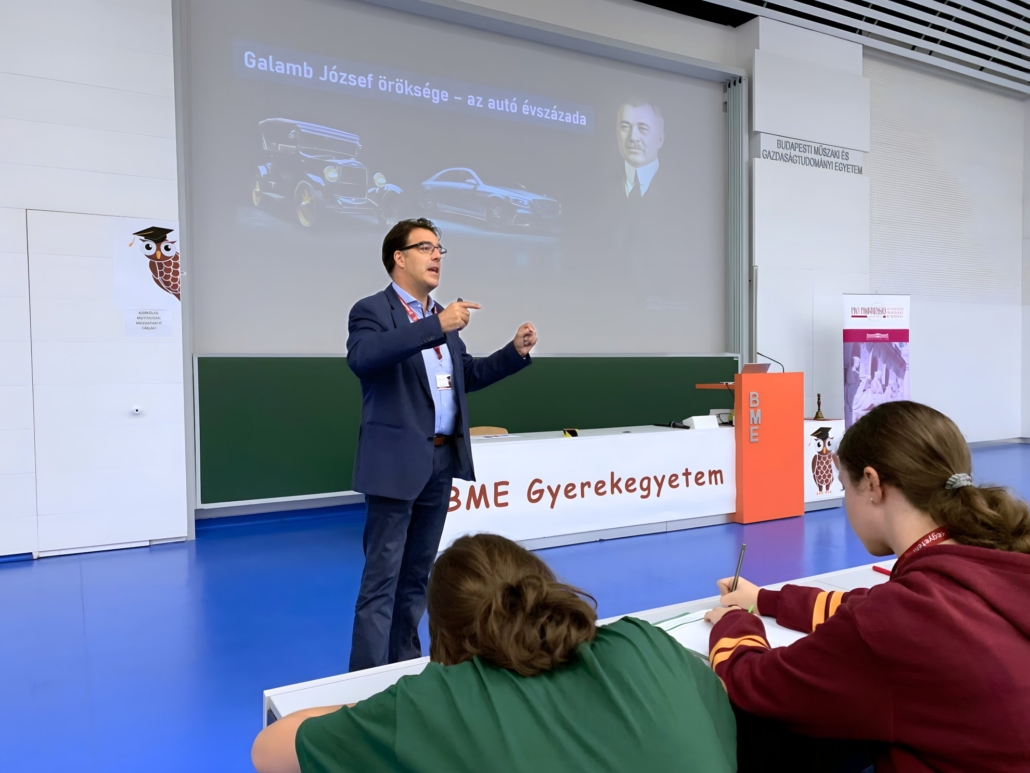
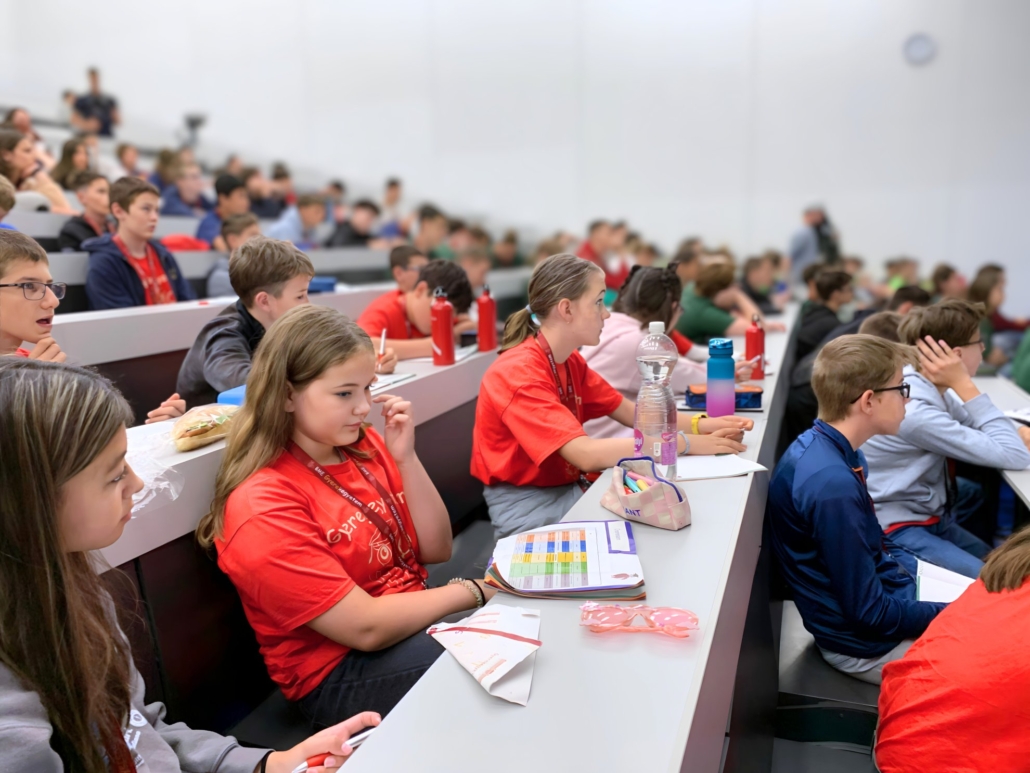
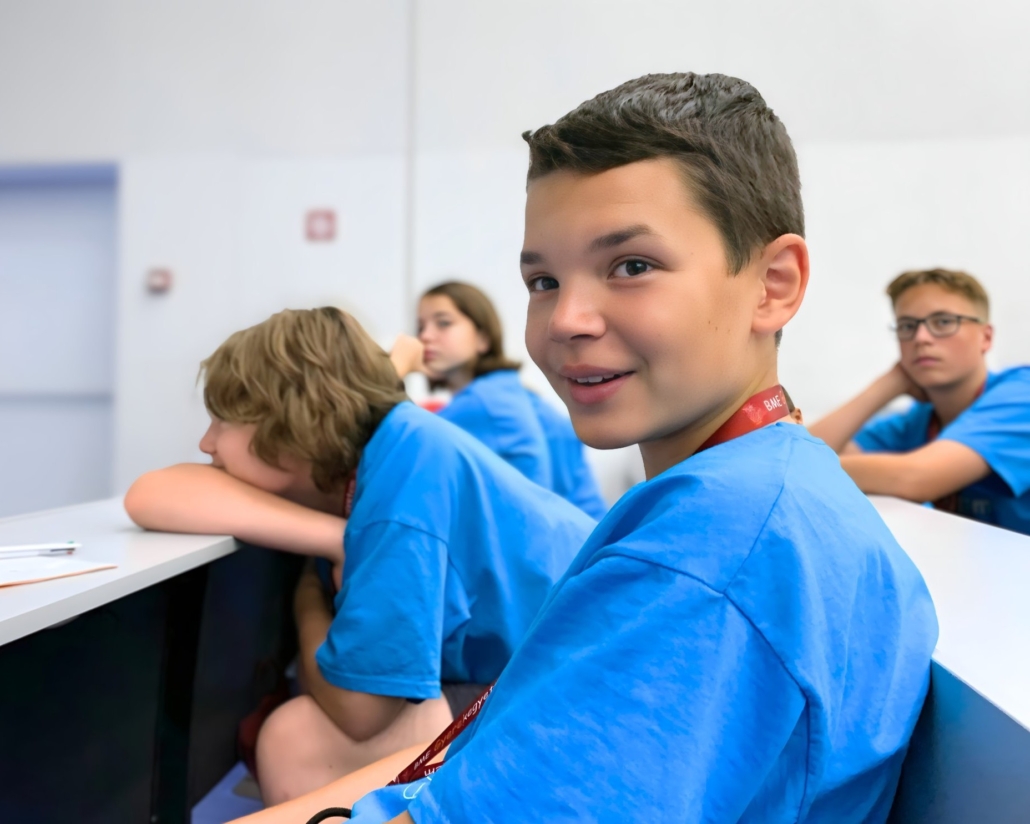
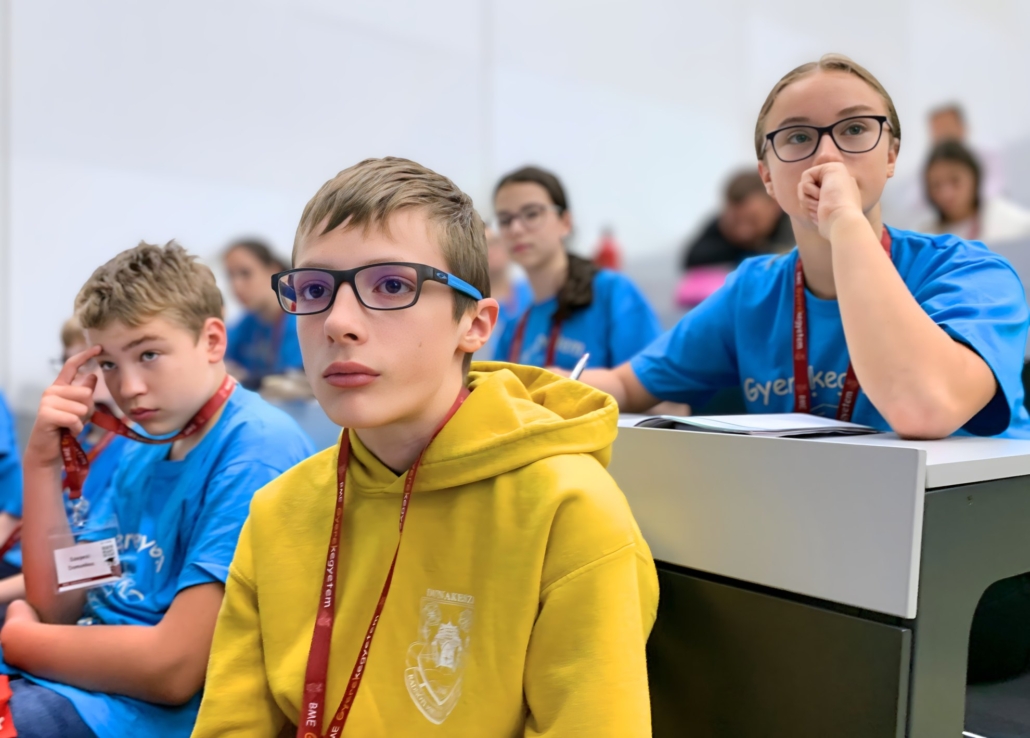
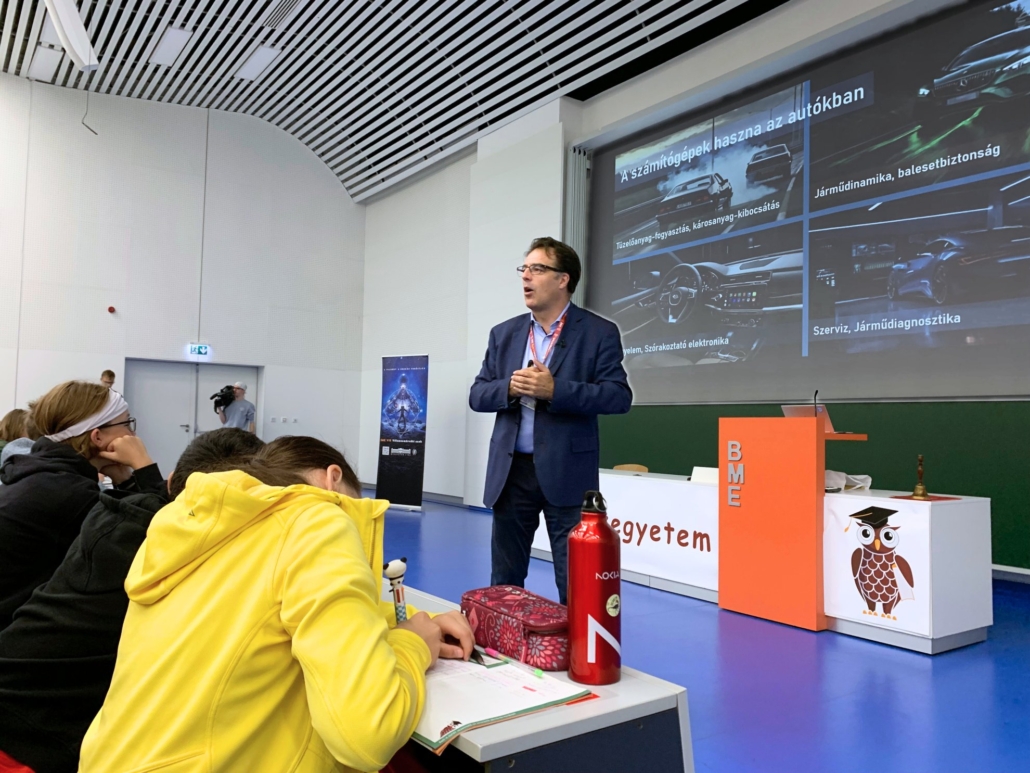
The BME Children’s University returned again in the summer of 2025, offering exciting lectures and activities for curious minds aged 8 to 14. One of the most popular sessions this year was a presentation by Dr. Zsolt Szalay, Head of the Department of Automotive Technologies and leader of the BME Automated Drive research group. His engaging and interactive lecture explored the evolution and future of self-driving vehicles.
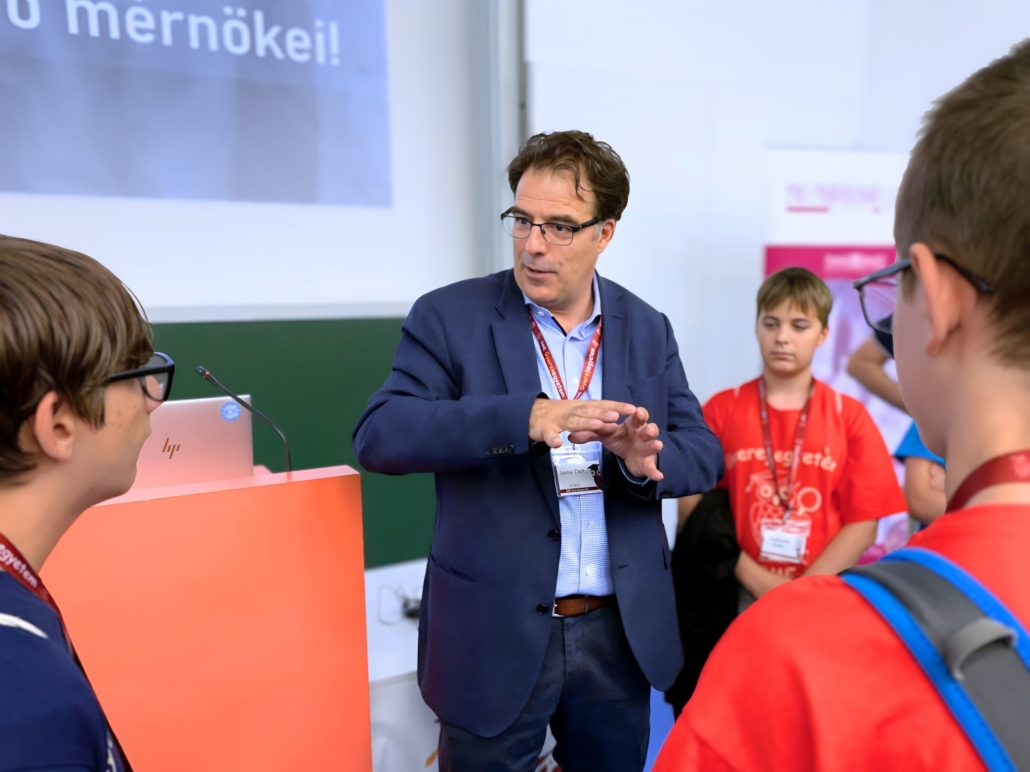
From the very beginning, the young audience was visibly captivated. The combination of technological insights, visual demonstrations, and real-world examples sparked genuine curiosity among the children. After the lecture, many gathered around Dr. Szalay to ask questions—some of which reflected surprisingly mature thinking about topics such as the future of mobility, artificial intelligence, and the reliability of autonomous systems.
“For me, this is a true source of inspiration every year. It’s amazing to see how much talent and openness is present in this age group. These moments always reaffirm my belief in the importance of engaging with the youngest generation,” said Dr. Zsolt Szalay.
This was not Dr. Szalay’s first appearance at the Children’s University—he has been a regular contributor for years and is personally committed to introducing engineering and science to children from an early age. Based on the feedback, this year’s participants also left with new ideas, inspiration—and perhaps their very first impressions of university life.
We hope that many of them will one day return to the halls of BME as university students—perhaps even as members of the Department of Automotive Technologies.
https://auto.bme.hu/wp-content/uploads/2025/07/gyerkegyetem-hir-3-.jpg14851856Bognár Bertalan/wp-content/uploads/2024/07/bme-at_logo_white_en01.svgBognár Bertalan2025-07-11 11:51:202025-07-17 11:53:26Thought-Provoking Questions About the Future – Dr. Zsolt Szalay’s Lecture at BME Children’s University
The Vehicle Safety and Security Research Group of the BME Automated Drive Lab, part of the Department of Automotive Technologies, actively contributed to the professional program of the first International Workshop on Digital Twins for Dependability, Resilience and Security (DT4DRS). The event was held as part of the prestigious IEEE/IFIP DSN 2025 conference in Naples, Italy.
The workshop focused on the applications of digital twin technology in enhancing reliability, resilience, and cybersecurity—especially in the context of vehicle systems. Our colleagues delivered several presentations demonstrating how these tools can support the development of safer and more resilient mobility systems in the future.
Congratulations to our presenters – Tamás Márton Kazár, Roland Nagy, Emil Nagy, and Zsombor Pethő – for their excellent professional contributions!
We were especially pleased to see Andrea Marchetta among the organizers. Andrea is a PhD student at the University of Naples Federico II who previously spent several months in Budapest continuing his research at our department. The workshop was organized with great dedication by him and his colleague, Marcello Cinque.
The event provided a valuable opportunity not only to present our latest research findings but also to further strengthen the collaboration between BME and the international academic community.
https://auto.bme.hu/wp-content/uploads/2025/07/Digital_twins-.jpg15361920Bognár Bertalan/wp-content/uploads/2024/07/bme-at_logo_white_en01.svgBognár Bertalan2025-07-02 12:51:552025-07-02 12:53:07Our researchers showcased their digital twin-based safety research at an international workshop in Naples
This year, one of the jury members at the Safety First! final was Péter Simányi, Lead Project Engineer at Jaguar Land Rover. In his view, students once again performed at a high level—not just technically, but in their attitude as well. We spoke with him about his experiences, the real industrial value of the competition, and the road to becoming a successful engineer.
– What impressions did you leave with after this year’s final? Was there anything that stood out to you in particular?
Even last year, we saw surprisingly mature ideas in the entries—and this year was no different. That’s especially encouraging to me. On the one hand, it reflects the excellent work being done by the university’s faculty and programs. On the other, it shows that students are not only following industry trends—they want to shape them. And I believe this ambition—the drive to help shape the future—is absolutely key to long-term success.
I was most impressed by projects where teams identified an existing problem and started with a known solution, then reimagined and validated it based on their own ideas. That mindset is crucial. In the real world of industry, it’s rarely about reinventing the wheel. Rather, we evaluate and adapt existing solutions to make our vehicles safer and better. That’s how we innovate a little each day—and, with some luck, occasionally experience a true “Eureka” moment.
– What kind of value does this competition offer from an industry perspective?
Engineering—especially in the automotive sector—rests on three key pillars: problem-solving, teamwork, and presentation. As engineers, we often face challenges we didn’t even know existed in the morning. Technical readiness is essential, particularly in areas like Functional Safety, where people’s lives are literally on the line.
At the same time, soft skills are just as important: we must collaborate with other teams and stakeholders, communicate effectively, negotiate compromises, and listen to and accept differing opinions. And eventually, we must present all this to decision-makers who often have only 30 minutes to grasp the issue and make a call. Safety First! gives students a supportive and safe environment to develop exactly these abilities.
– How successfully does the competition reflect real-world industrial challenges?
Very successfully. Students are able to pinpoint problems that industry players also struggle with—albeit on a different scale, since their resources and experience are different. But accurate problem formulation is already a sign of insight—even if guided by university mentors.
Several times—both this year and last—jury members were surprised by how closely a team’s project mirrored problems currently being tackled by global automotive groups. And it’s especially positive that some students deliberately chose topics outside their comfort zones to broaden their horizons. That’s a tremendously valuable attitude that deserves support.
– Were there any students or teams worth keeping an eye on for the long term?
Yes—and in fact, two members of this year’s winning team, secUred, are already my colleagues at JLR, having joined the company some time ago. And I believe one of the members of last year’s third-place team, vADAS, is also now working with us.
That says a lot about this competition: it’s an excellent springboard. As jury members, we’re watching not only as judges—but as potential future colleagues. The opportunity is there for everyone.
You don’t need to coordinate a Moon landing as a university student—what you do need is dedication, persistence, and self-management. From what I’ve seen so far, students are getting the technical knowledge they need from the university.
– What advice would you give to those planning to participate next year?
Go for it. Step up, show who you are, gain experience! After every final, I’ve told participants: you can be proud of yourselves. The fact that you chose to spend your time learning and growing—often in skillsets you didn’t even expect to use—will always pay off.
I used to be a professional athlete, and one thing we often heard was: “No effort is ever wasted.” That holds true in industry too. These students poured their free time into their projects—brainstorming, collaborating, getting stuck, getting unstuck, and going the extra mile. That attitude takes you far—in your career and in life.
And presentation skills are especially important. You can tell when someone has watched professional colleagues present during an internship. My advice is to think carefully in advance about what you want to show and what you want to say. Keep those separate. Overloaded slides take attention away from your message.
I follow the 7:1 rule: no more than seven words per image on a slide. That way, your audience can absorb the content—and you can tell the rest yourself.
– What does it mean to you personally to take part in this university-industry collaboration as a jury member?
It was a truly rewarding experience. I believe this kind of collaboration is a model worth following, as it serves the interests of both sides. University education is only truly effective when it prepares students for the real world—and industry has a strong interest in supporting that process. After all, today’s students are tomorrow’s engineers—our future colleagues.
The synergy among the jury members was absolutely fantastic. We understood each other very well and collaborated effectively throughout.
I am truly grateful for the opportunity to be part of such a prestigious competition once again.
https://auto.bme.hu/wp-content/uploads/2025/06/Simanyi_Peter-.jpg15361920Bognár Bertalan/wp-content/uploads/2024/07/bme-at_logo_white_en01.svgBognár Bertalan2025-06-26 12:00:172026-02-24 16:13:31“In Industry, Too: No Effort Is Ever Wasted”
Each year, the finals of the Safety First! competition offer a unique meeting point: young engineering students present their ideas and projects to experts working at the forefront of the automotive industry. This year, several of our industry partners accepted our invitation to join the jury – including Réka Jenei, a cybersecurity expert at Robert Bosch Kft., who participated in the competition for the second time.
In the first article of our two-part series, we share her impressions of the finals and her thoughts on the potential she sees in the next generation of engineers.
Fresh Ideas for Real Challenges
“This year’s competition, just like last year’s, was of a very high standard – both in terms of organization and the quality of the work presented,” Réka began. She was particularly pleased to see multiple projects offering innovative solutions in the field of cybersecurity – a topic of both professional and personal relevance to her.
The topics and approaches presented in the finals reflected the current state of the automotive industry well:
“The projects responded clearly to real-world challenges and gaps in the industry, and in many cases pointed to opportunities for improvement or optimization.”
More Than a Competition – A Real Learning Experience
From an industrial perspective, Réka sees the competition as a valuable learning opportunity. Participants need to conduct active research, understand standards and technical constraints, and be able to present their ideas clearly and convincingly. This presentation format closely mirrors the dynamics of pitching to corporate investors – making the competition a highly realistic training ground for students.
“The competition provides multiple avenues for growth – skills that participants can take with them into their future careers,” Réka emphasized.
Remarkable Commitment
We were also curious whether there was a student she could imagine working with in the future, or a project that she found particularly inspiring. Her answer was thoughtful:
“In my view, it’s already remarkable when someone decides to take part in a competition like this. It’s not a required part of the curriculum – it’s an additional challenge that takes time, effort, and genuine commitment.”
The projects that reached the finals, Réka noted, all stood on a foundation of real intent, interest, and hard work – and that alone sets the competitors apart.
“I would gladly work with any one of them in the future.”
A Word of Advice for Next Year’s Competitors
Her advice to future participants: don’t hesitate to apply – every project has value. At the same time, she highlighted the importance of how a project is presented:
“As jury members, we pay attention to both the content and the form – the way a project is documented and presented also plays a big role in how convincing it is.”
A Bridge Between Industry and Academia
For Réka, being part of the jury was not just a professional responsibility but a source of inspiration:
“It was an honor to serve on the jury again this year. It gave me the opportunity to meet talented young engineers and gain insight into new, innovative directions in both safety and security.”
She believes that involving industry players in academic competitions is key to helping higher education better respond to real market challenges:
“Collaborations like this help build a bridge between industry and academia – where both sides can learn from each other.”
https://auto.bme.hu/wp-content/uploads/2025/06/Jenei_Reka3-.jpg15361920Bognár Bertalan/wp-content/uploads/2024/07/bme-at_logo_white_en01.svgBognár Bertalan2025-06-26 11:51:132026-02-24 16:05:28Industry Insights on Academic Tracks – Jury Members Reflect on the Safety First! Competition
https://auto.bme.hu/wp-content/uploads/2025/06/Hir_kep.png19462432Bognár Bertalan/wp-content/uploads/2024/07/bme-at_logo_white_en01.svgBognár Bertalan2025-06-11 18:29:362025-06-25 10:28:10Demonstration Video Released: V2X Test System in Action at ZalaZONE
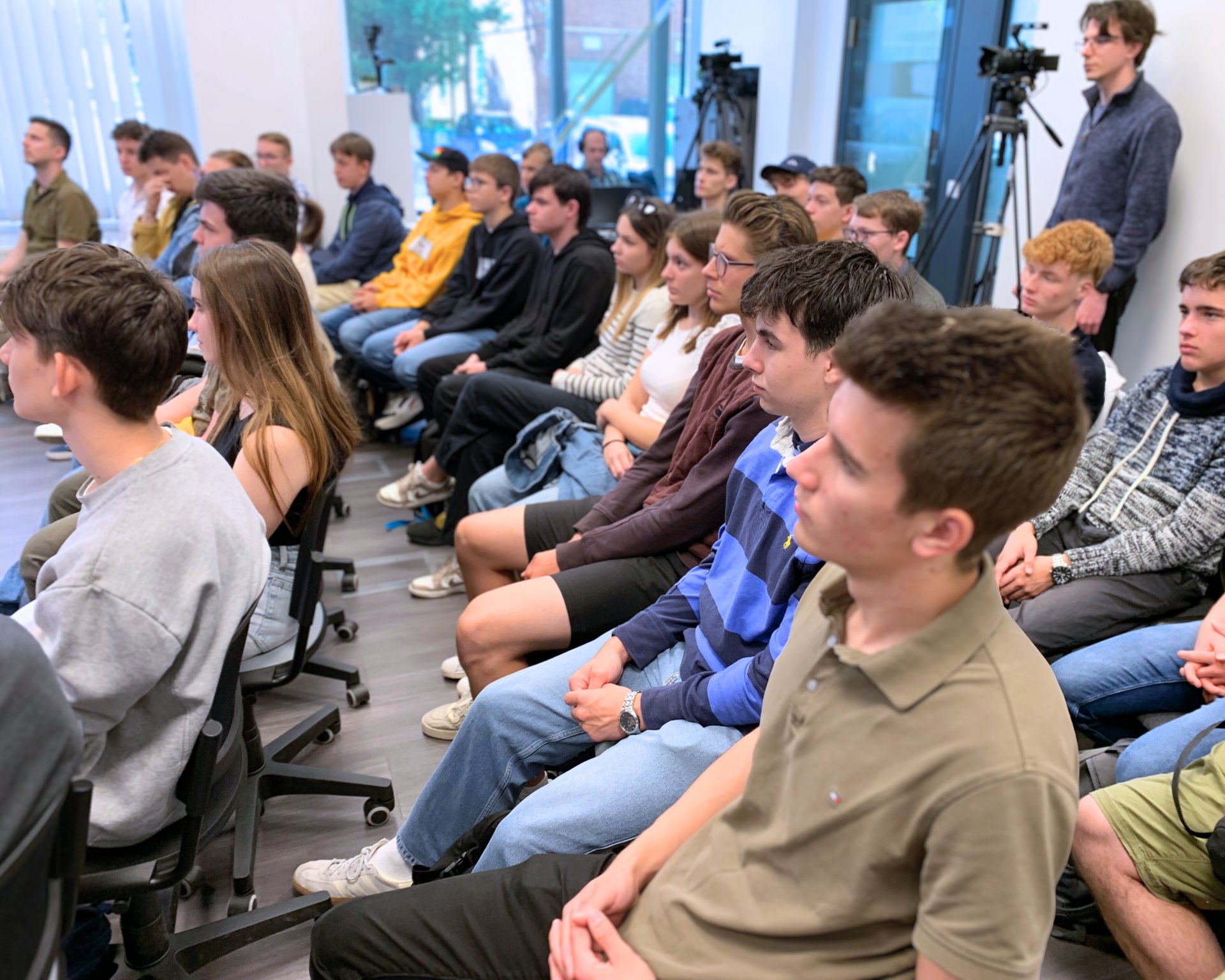
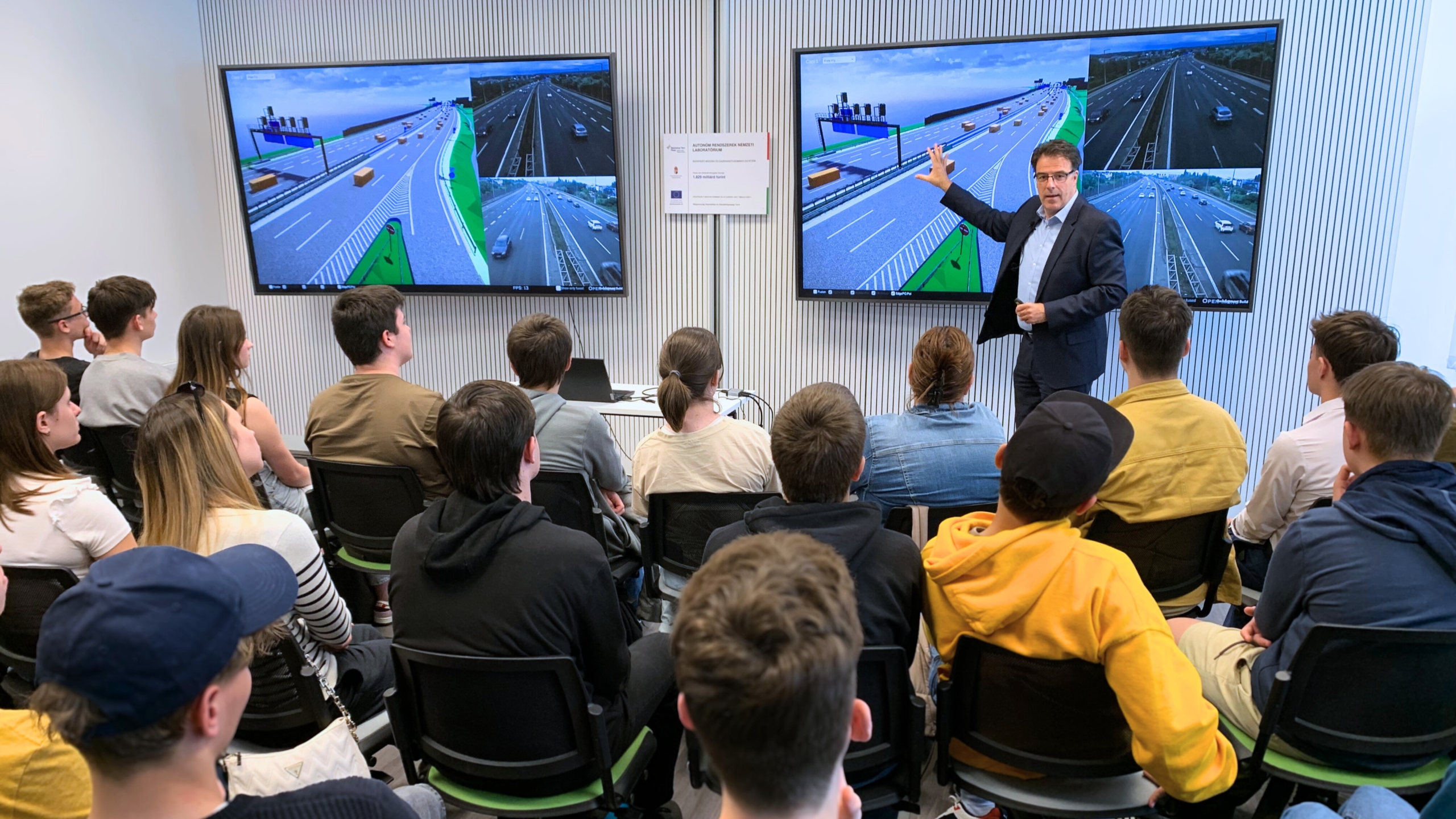
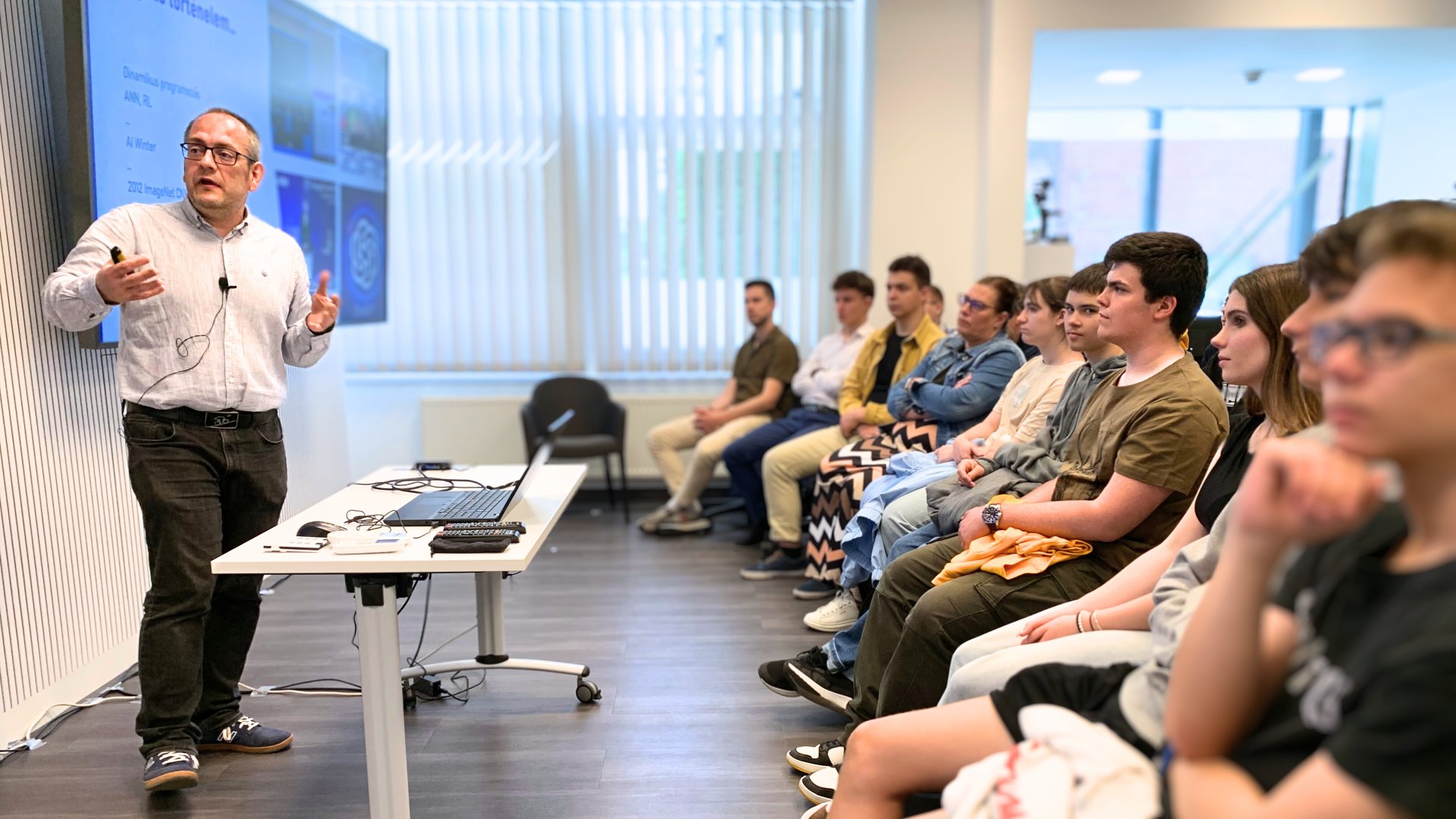
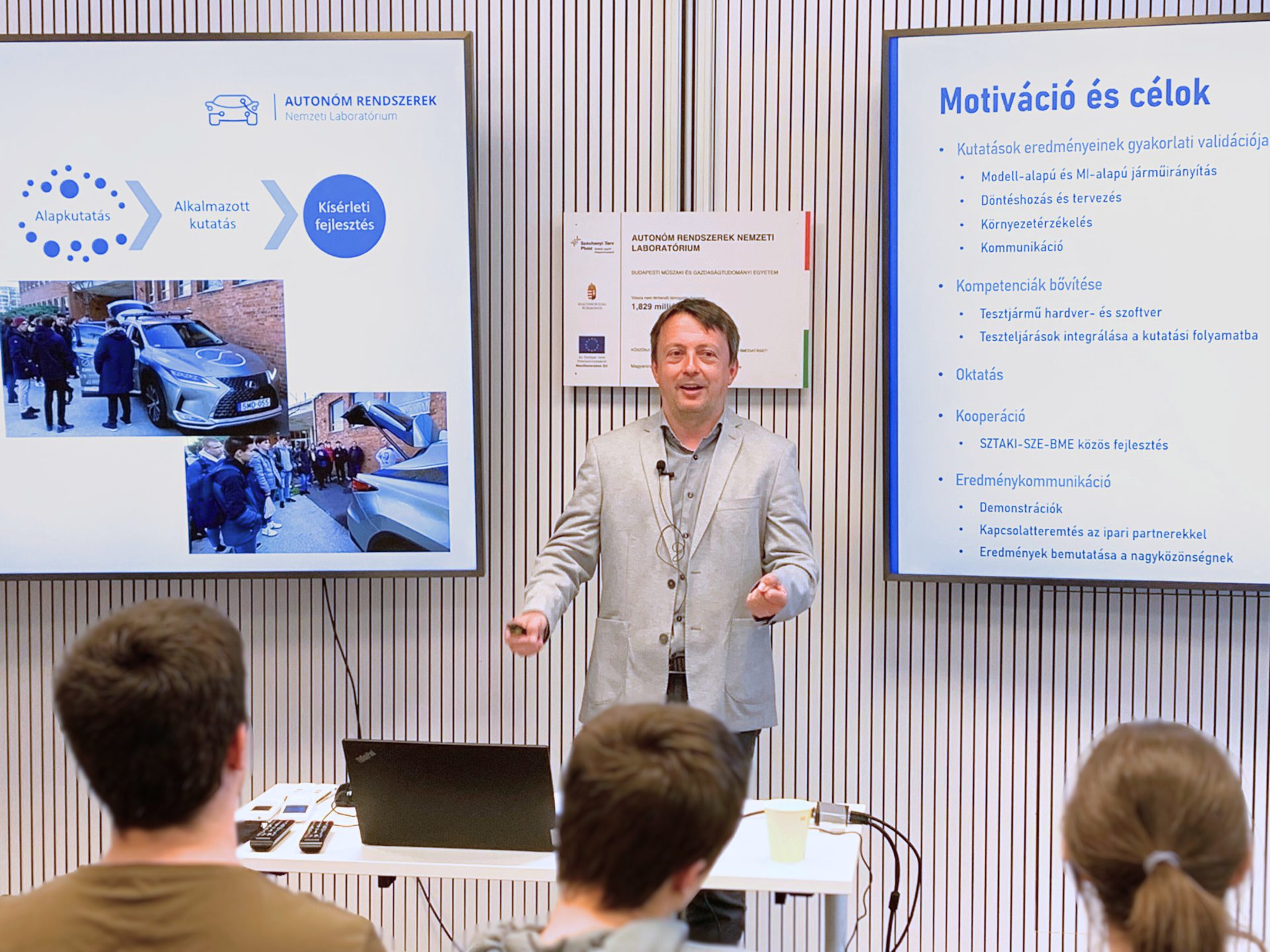
The Autonomous Systems National Laboratory at the Budapest University of Technology and Economics (BME) recently brought the latest results of autonomous vehicle research closer to high school students through an online educational resource and an associated knowledge-based quiz competition. The top-performing students of the nationwide quiz were invited to a unique experience day on campus, where they got a glimpse into the underlying technologies, laboratories, and ways of thinking behind future mobility. Interviews conducted throughout the day reveal that it was not only the live demonstrations that captivated students, but also the depth of knowledge and the authenticity of the expert speakers that left a lasting impact.
The event was hosted by actor Iván Fenyő.
“It’s important that kids hear about these technologies from credible sources”
Csilla Petrohainé Rostás, a teacher from Padányi Catholic School in Veszprém, shared her impressions after the event, speaking about the students’ curiosity and the pedagogical challenges of the digital future.
“There is a huge interest in autonomous vehicles,” she began. “We had already discussed the content with the students after the teacher briefing, and the materials clearly made a strong impression on them.” She noted that the students found the online content and the quiz game engaging, particularly the fact that sometimes there wasn’t a single correct answer—something that sparked real thinking.
Many students from her school took the test, and three of them were invited to the event. “They were thrilled, because they could feel this was a meaningful invitation, a real opportunity.”
As a teacher, she found the day equally inspiring. “It was fascinating to gain insight from first-hand experience, to see exactly where this field currently stands.”
The professional level of the event also reinforced her teaching philosophy. “It was motivating, because it confirmed that I’m on the right track when I talk to my students about the digital future. But I also see how much more teamwork, information, and inspiration they need, because their knowledge in this area is still quite limited.”
She emphasized the importance of credible sources. “There is a lot of sensationalist content in the media, but students only get a truly meaningful picture from events like this. That’s why it would be great if these programs were held more regularly.”
Dr. Szalay Zsolt előadása
She also highlighted that autonomous vehicle development is not only for engineers. “It’s important for students to see that if someone is interested in law, they don’t only have to become a lawyer—they could work on the legal aspects of autonomous systems. I’d love to see more attention given to these interdisciplinary paths in education.”
Social acceptance, too, is a key issue. “How does society handle the idea that not all vehicles are driven by humans anymore? This is an exciting area for both psychology and sociology.”
Closing her remarks, she thanked the organizers and offered suggestions: “It would be amazing if students had more opportunities to meet credible professionals who not only give presentations but offer real insight into what skills are needed. These moments also help teachers better understand how to motivate students. If we had a clearer idea of where incoming university students tend to struggle, we could better support them.”
“The quiz was great, and now we’re even considering trying out some form of Scientific Student Research Projects (TDK) ourselves.”
The Lecture of Tamás Bécsi, Ph.D
A Glimpse into the Near Future: Students Reflect on the ARNL Knowledge Challenge
The quiz competition organized by the Autonomous Systems National Laboratory at BME was more than just an online knowledge test: it was an opportunity for the top-performing students to experience firsthand what it means to work on the automotive technologies of the future. Interviews from the event reveal that students were not only amazed by live demonstrations but also deeply inspired by the expertise and authenticity of the speakers.
Márton Marton-Bódi (Szent Mór School Center, Pécs) joined the quiz out of a general interest in electronics and engineering. “I was already curious about autonomous driving and AI, but I had never seen these systems explained in such detail before.” By the end of the day, he was enthusiastically talking about AI functionality and vehicle architecture.
Zsombor Bánhelyi (Ady Endre High School) found the program “inspiring.” “I especially liked the sensor explanations in the presentations. I understood details I had never seen before.” He hadn’t expected to be invited but was delighted to attend.
András Vincze-Pál (Budapest Fasori Evangelical High School) already has his sights set on BME. For him, both the content and the environment were impactful. “The level of research and presence of technology were really impressive. It’s clear that the future is being built here.”
The Lecture of Szilárd Aradi, Ph.D
Kristóf Bognár and Gergely Mendrei-Benkő from the Bánki Donát Technical School received the quiz as an assignment during online learning. For both of them, artificial intelligence was the highlight: “We got a peek into the future,” said Kristóf.
Csongor Csevrenka and Patrik Pardi from Gyula Catholic High School especially remembered Dr. Tamás Bécsi’s lecture: “It was simple, easy to understand, and still exciting.” They also appreciated the lab visits and the presentation about the ZalaZONE proving ground, which Csongor described as “an amazing experience.”
Students Ármin Hegedűs and Benedek Dunajcsik (Padányi Catholic School, Veszprém) most enjoyed the presentations and seeing the real technologies up close. “We saw how the LIDAR works and how systems connect,” they shared.
Lab Visit
Angéla Balogh (Csokonai V. Mihály High School, Debrecen) was invited after her chemistry teacher forwarded the quiz. “I didn’t expect it to be this interesting. I learned so much about AI and autonomous vehicles. And it was great to see everything up close, not just in pictures.”
Marcell Kozsda, who learned about the event through his mother, a BME staff member, especially appreciated the amount of information. “There was a lot to process, but it was incredibly interesting. Especially the monitoring systems that feed data to AI. I had no idea how complex that process is.”
The students’ responses clearly show: this event offered not just information, but motivation, guidance, and inspiration. Many of them are still exploring their paths, but one thing is certain: on that day, they moved closer to a future we are only beginning to imagine.
Lab Visit
https://auto.bme.hu/wp-content/uploads/2025/06/diak1-.jpg15361920Bognár Bertalan/wp-content/uploads/2024/07/bme-at_logo_white_en01.svgBognár Bertalan2025-05-29 15:09:072025-06-23 15:26:01A Day That Might Shape the Future: High School Students Among BME Researchers
On March 21, the first round of the Safety First! competition successfully took place, where six teams presented their innovative solutions to current challenges in transportation and vehicle safety. The participants focused not only on identifying problems but also on proposing feasible solutions, highlighting applicable technological and methodological innovations.
However, the competition is far from over: the teams have until May 9 to further develop their concepts with the support of industry and academic mentors.
Projects presented in the first round: 🔹 secUred – Enhancing Vehicle-to-Infrastructure (V2I) communication security through elliptic curve authentication 🔹 Percepta – Perception-Aware Intelligent Transport System for the preemptive protection of vulnerable road users 🔹 CLARA – Chessboard Lane Risk Assessment: A predictive upgrade to LKA/ACC systems for proactive collision avoidance 🔹 Kokanyek – Mechanical failure detection from vibration data using neural networks 🔹 Fuzzers – Innovative solutions for fuzz testing vehicle control functions 🔹 G.A. Fusion – Enhancing highway safety through intelligent speed limit control and sensor fusion
We would like to thank our sponsors, Bosch and JLR, for making this competition possible, as well as our jury members – Péter Simányi (JLR), Réka Jenei (Bosch), Ádám Török (BME KJK), and Tamás Kazár (BME Automated Drive) – for their professional evaluation and support.
Congratulations to all participating teams, and best of luck in the next round! 🚀
#SafetyFirst #Innovation #TransportationSafety
https://auto.bme.hu/wp-content/uploads/2025/03/Safety__Security-hir_kep-.jpg15361920Bognár Bertalan/wp-content/uploads/2024/07/bme-at_logo_white_en01.svgBognár Bertalan2025-03-27 18:03:522026-02-24 16:06:40Safety First 2025 – The First Round is Complete!